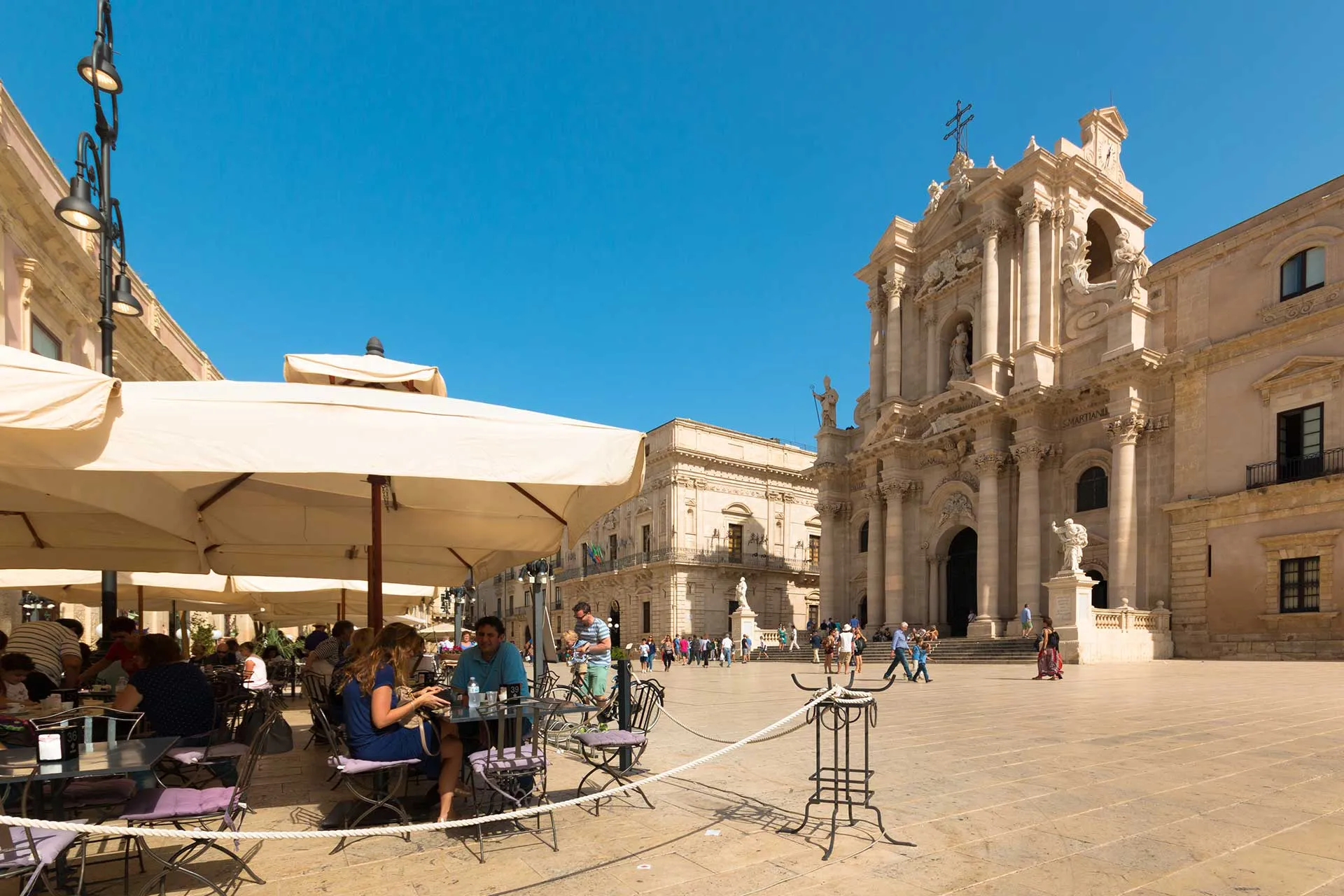
Three thousand years of history
in two square kilometers.
From the Temple of Apollo to the baroque Cathedral, from the Greek Theater to the Catacombs of San Giovanni. Siracusa has been a UNESCO World Heritage Site since 2005. Here you'll find the places every guest asks us about — the ones we tell everyone not to miss.
Walking distance from everything,
no car, no stress.
Zone Ortigia
The baroque heart on the sea.
The island is the original nucleus of Siracusa. The Corinthians landed here in 734 BC, founding the colony that Cicero would call «the greatest and most beautiful of all Greek cities». Connected to the mainland by two bridges, it preserves 27 centuries of layered history: Doric temples absorbed into baroque churches, thousand-year-old fountains, palaces that change face with every shift of light.
The quarters of Ortigia
Ortigia, barely a square kilometer, is divided into four historic quarters with ancient names. Each has its own stone, its own light, its own character, and walking through them is a way to understand how the city was built.
- Graziella, to the north, on the Porto Grande. A working-class district with the typical laundry strung between balconies; you can catch the smells of cooking from the open windows. This is where the market lives, where you hear the thickest Siracusan dialect.
- Spirduta, the medieval quarter par excellence, where Palazzo Montalto stands. Angled alleys, glimpses of courtyards, silence even in high season.
- Giudecca, the Jewish quarter with the Miqveh. Narrow, enclosed, contemplative.
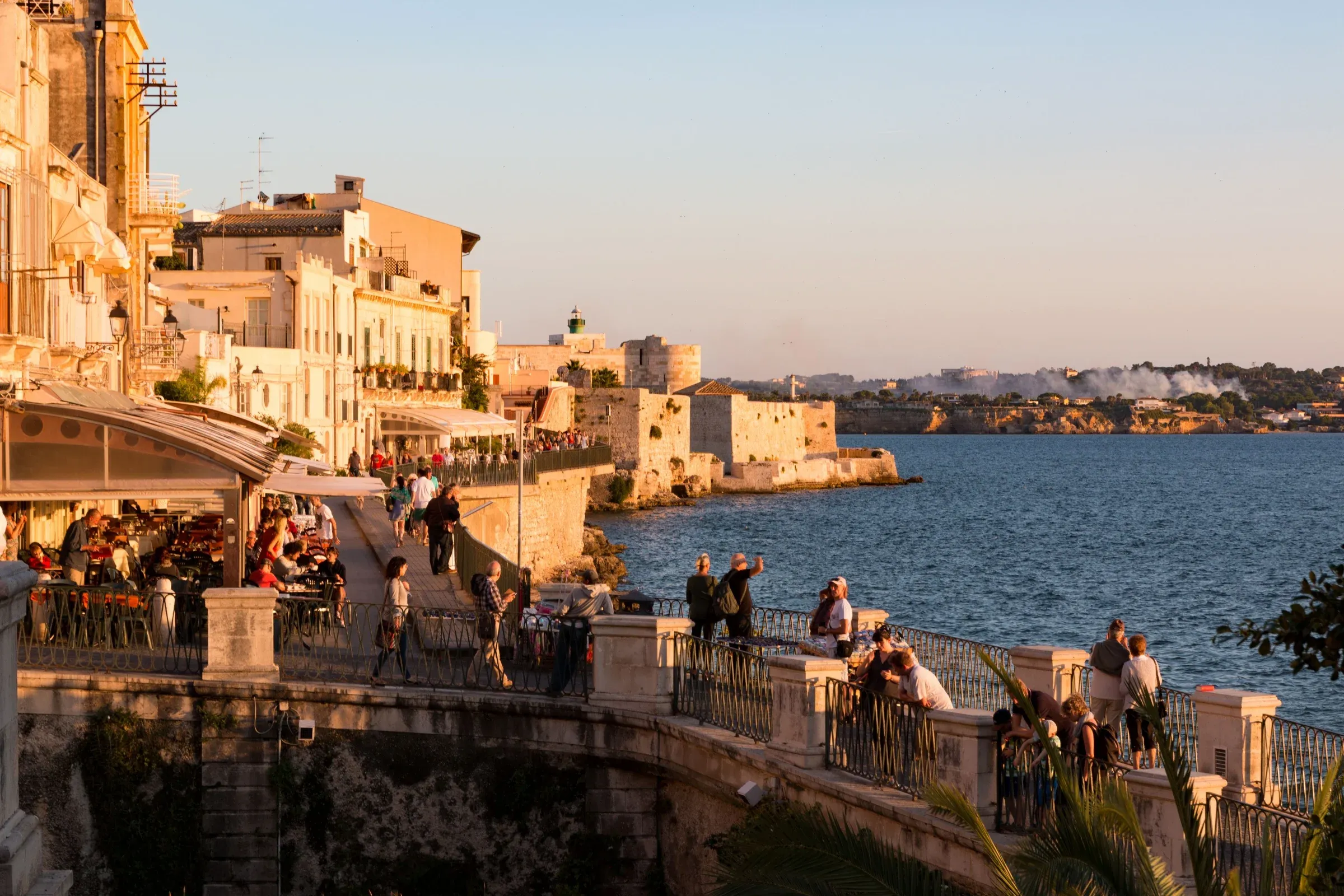
- Bottari / Turba, to the south, toward Fonte Aretusa and Castello Maniace. Seafront promenades, aristocratic palaces from the 17th–18th century, the most beautiful light at sunset.
Without rushing: Ortigia can be walked at any hour, but is best in the early morning and at sunset when the limestone changes color.
Cathedral (Duomo) and Piazza del Duomo
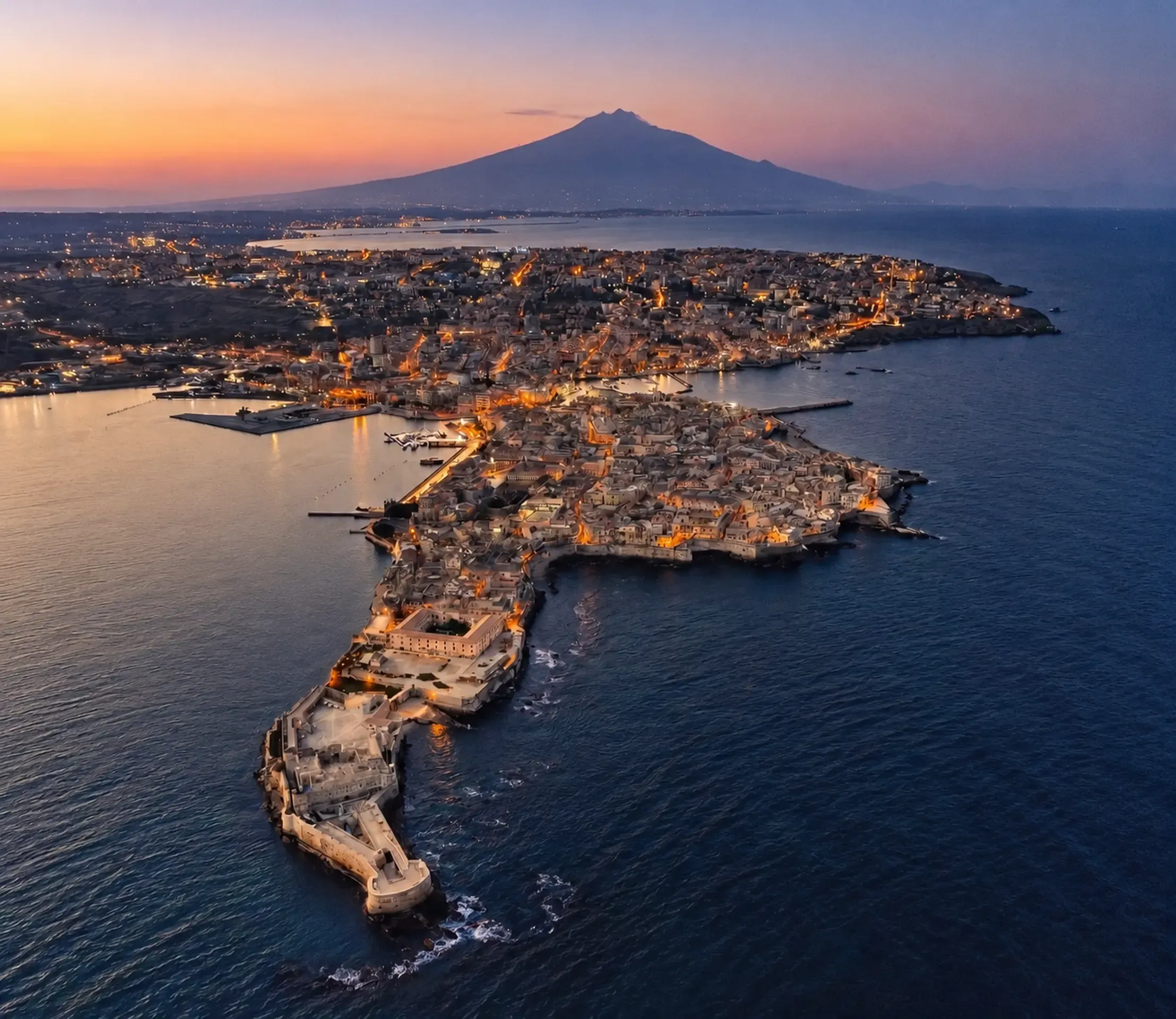
One of the most extraordinary architectural overlaps in the Mediterranean. In the 5th century BC the people of Siracusa built a Doric temple dedicated to Athena: its columns are still visible on the facade and along the nave. In the 7th century AD the temple was converted into a Christian basilica; after the earthquake of 1693 the facade was rebuilt in baroque style by Andrea Palma (1728–54).
The square in front, one of the most beautiful baroque stages in Europe, is home to Palazzo Beneventano del Bosco, Palazzo Vermexio (the current town hall) and the Archbishop's Palace. Ideal in the early morning for the raking light, or late at night for the silence.
Fonte Aretusa
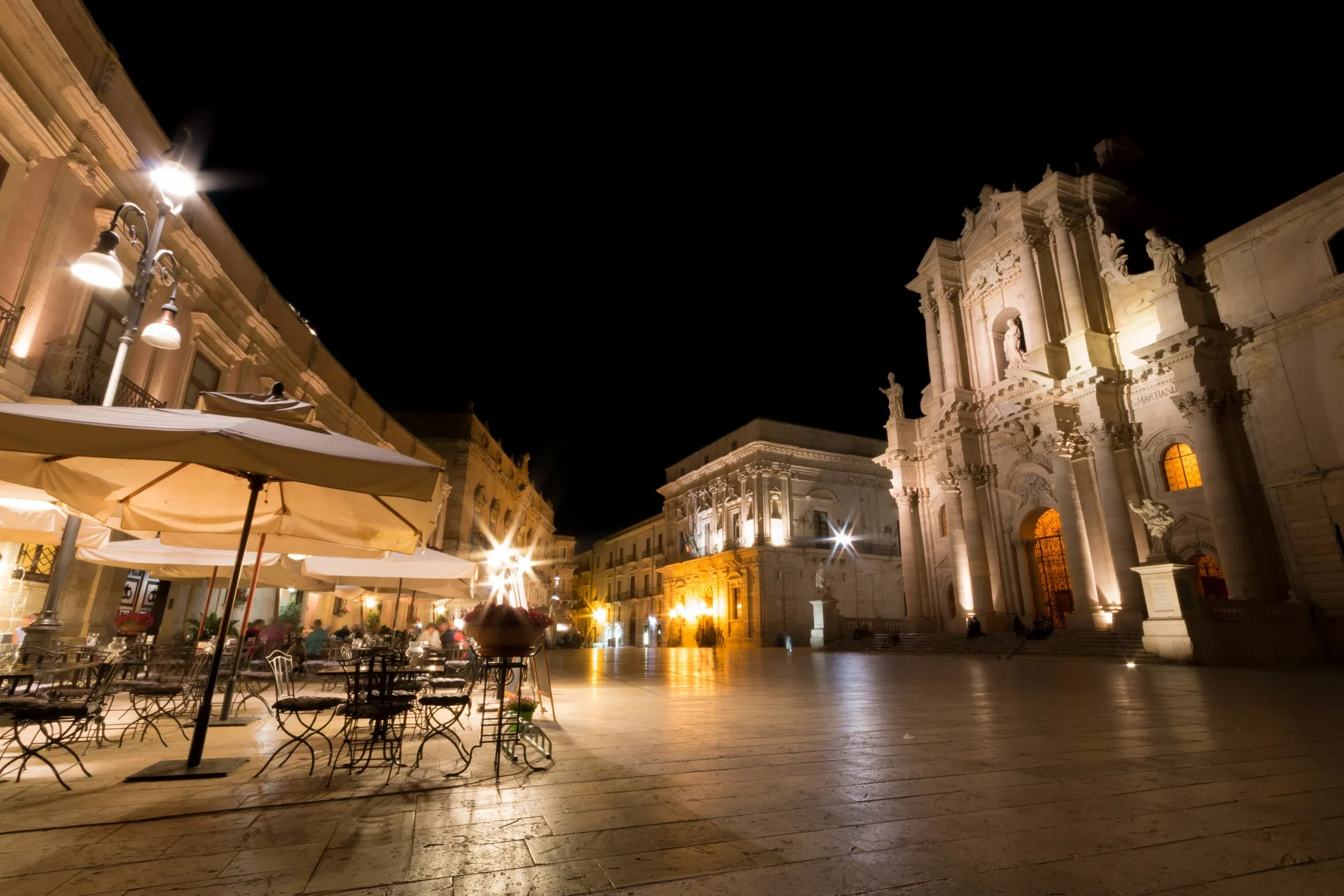
A freshwater spring overlooking the Porto Grande, already cited by Pindar and Virgil. The myth: the nymph Arethusa flees the river god Alpheus and Artemis transforms her into a spring; she re-emerges here, in Ortigia, after passing beneath the sea.
The papyrus plants growing in the pool, planted in the 19th century during the beautification commissioned by Baron Borgia, thrive thanks to the freshwater and the climate. At sunset half the city gathers around the spring.
Temple of Apollo
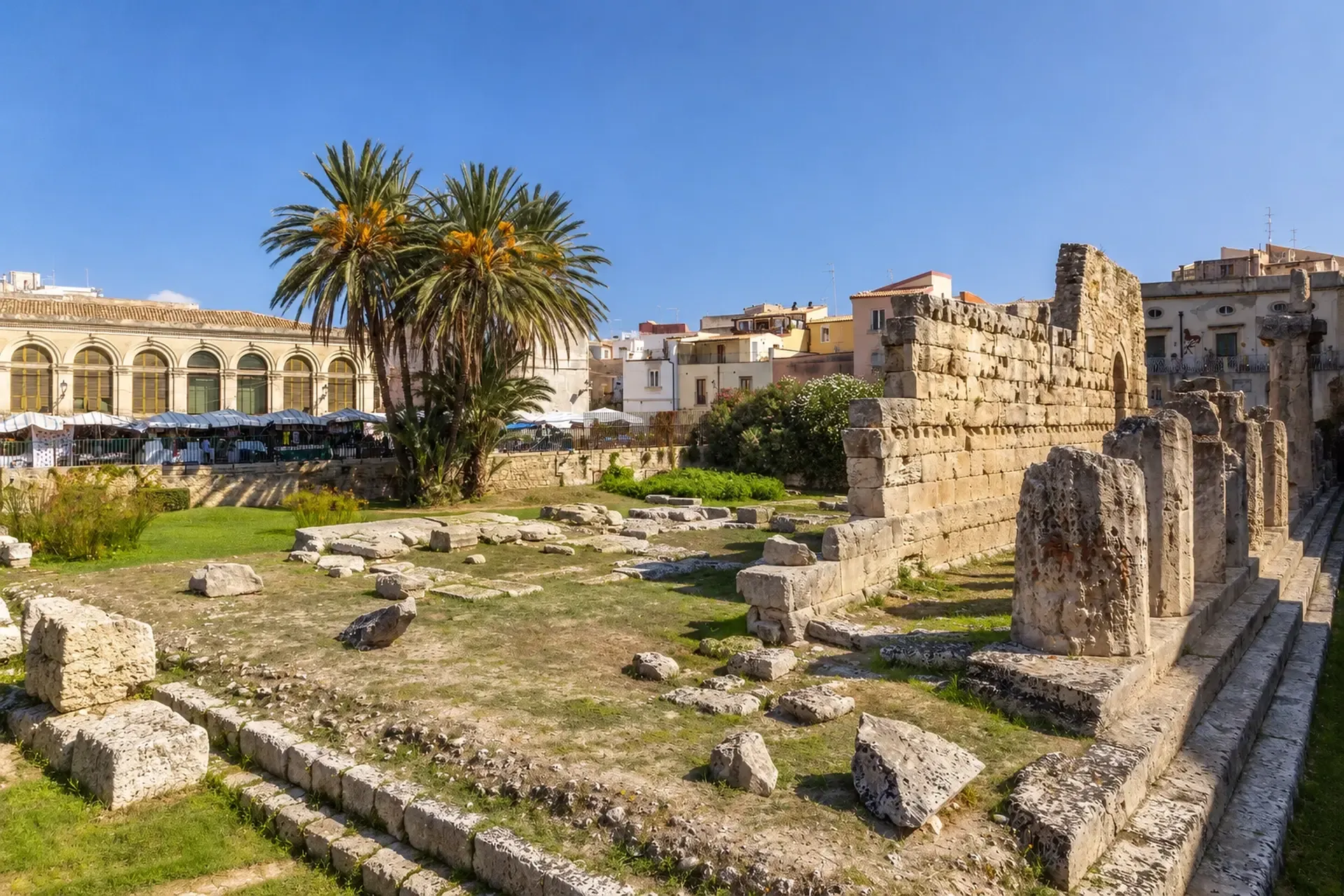
The oldest peripteral Doric temple in Magna Graecia (6th century BC). An inscription on the architrave mentions the architect Kleomenes — one of the first signatures of a Greek architect to survive to our day.
Its history tells the story of the Mediterranean: converted into a Byzantine church, then an Arab mosque, then a Norman church, then a Spanish barracks. Today it stands in the open air, at the northern edge of Ortigia.
Castello Maniace
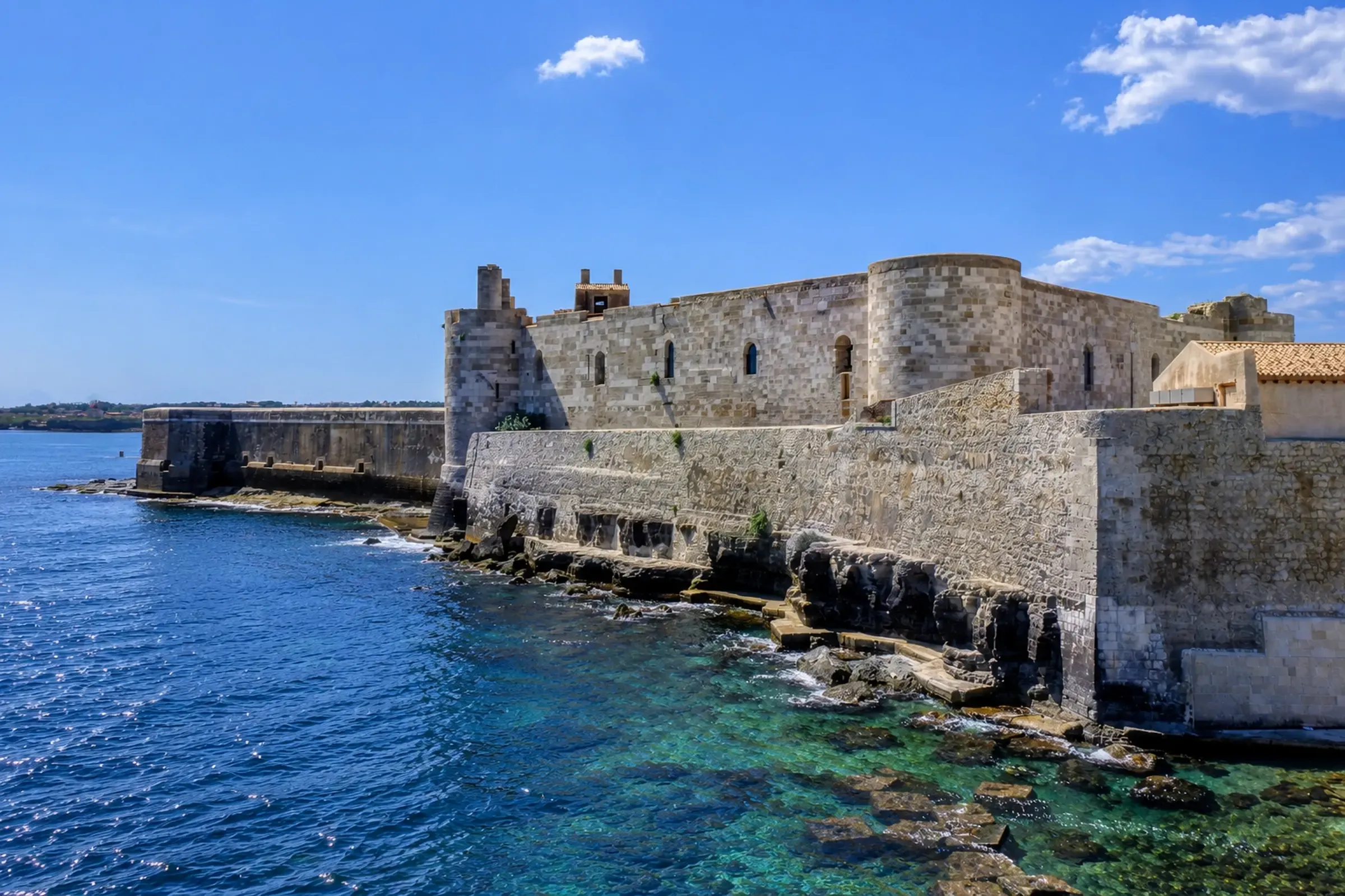
Commissioned by Frederick II between 1232 and 1239 on the southern tip of Ortigia, it takes its name from George Maniakes, the Byzantine general who reconquered Siracusa from the Arabs in 1038. A pure example of Frederician architecture: a marble portal in Gothic style, a Hypostyle Hall with twenty-five cross vaults on sixteen limestone columns.
From the top, all you see is the horizon of the sea. For centuries it served as a prison for the rulers of the day; today you can go inside.
Santa Lucia alla Badia
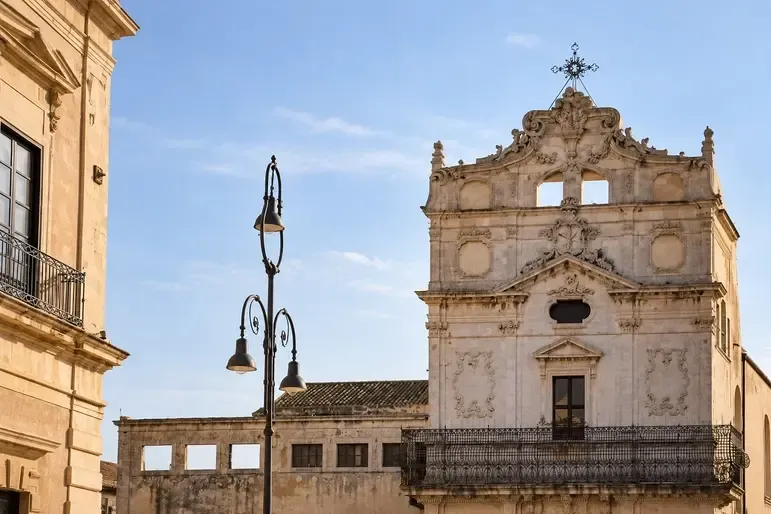
A small late-baroque church overlooking Piazza del Duomo, with an 18th-century facade and an intimate interior. Dedicated to Saint Lucy, Siracusa's martyr of 304 AD and patron saint, between 2009 and 2020 it was the temporary home of Caravaggio's Burial of Saint Lucy (1608), kept here during restoration of the original church.
It is still worth a stop on the Piazza del Duomo stroll: the facade by Luciano Caracciolo (1703), the interior with Sicilian marble floors and stuccowork, and on December 13 the feast of the saint — one of the most heartfelt on the island.
Ortigia Market
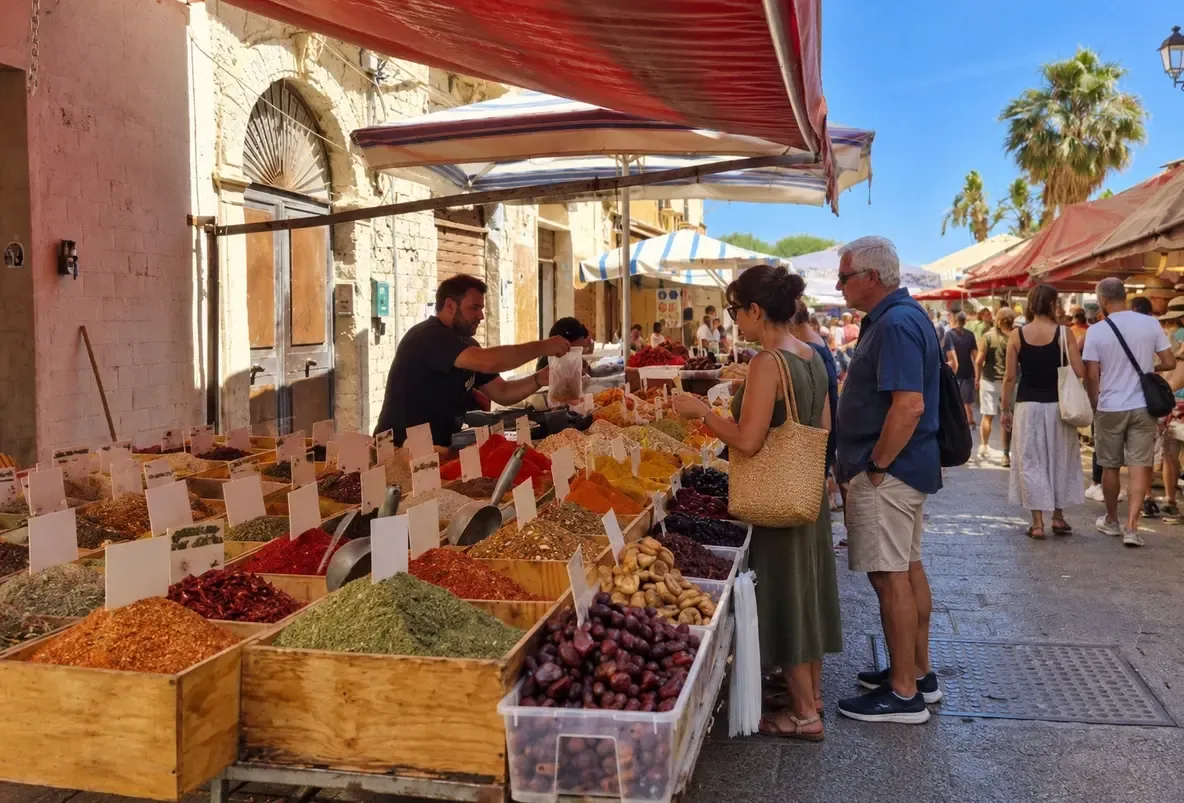
Along Via Emanuele De Benedictis, a stone's throw from the Temple of Apollo, one of Sicily's liveliest markets spreads out every morning — on a par with Palermo's Ballarò and Catania's Pescheria. The fish market at the center, stalls of fruit and vegetables, butchers, charcuterie, cheeses, spices, breads, olives, sun-dried tomatoes. Overlapping voices, the vendors' cries, the smell of lemons.
In recent years the market has also become a lunch destination: pane cunzato, swordfish sandwiches, neonata fritters, plates of raw seafood prepared on the spot at improvised counters. Go early in the morning, on an empty stomach.
Galleria Palazzo Bellomo
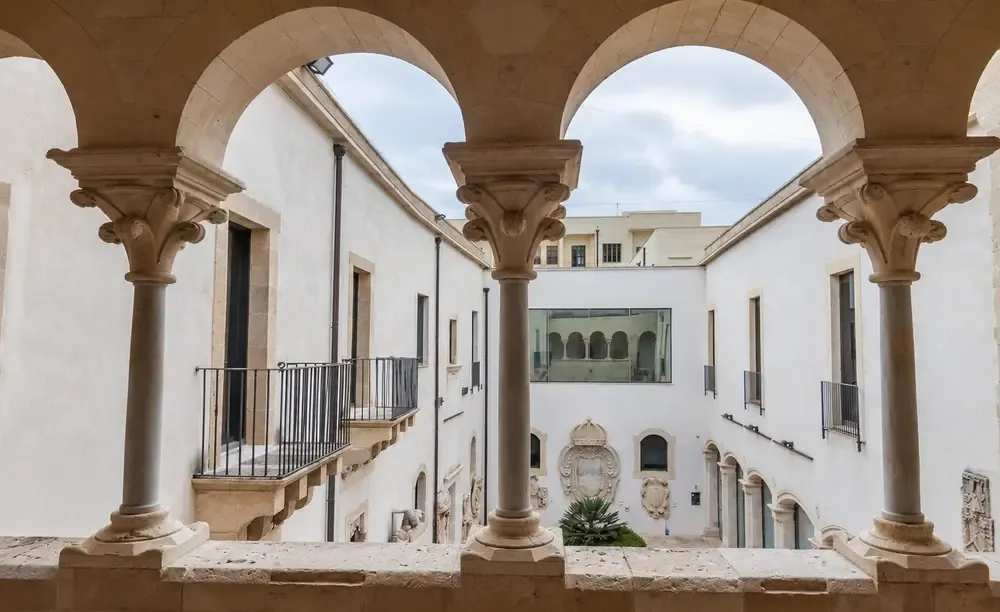
A Regional Gallery housed in a palace of Swabian origin (13th c.) expanded in Catalan style in the 15th century. The collection spans the period from the early Middle Ages to the baroque: sculptures by Francesco Laurana, polyptychs, goldsmithery, ceremonial carriages, Sicilian nativity scenes.
Via Capodieci, halfway between the Cathedral and Fonte Aretusa. A compact, uncrowded visit, with captions also in English.
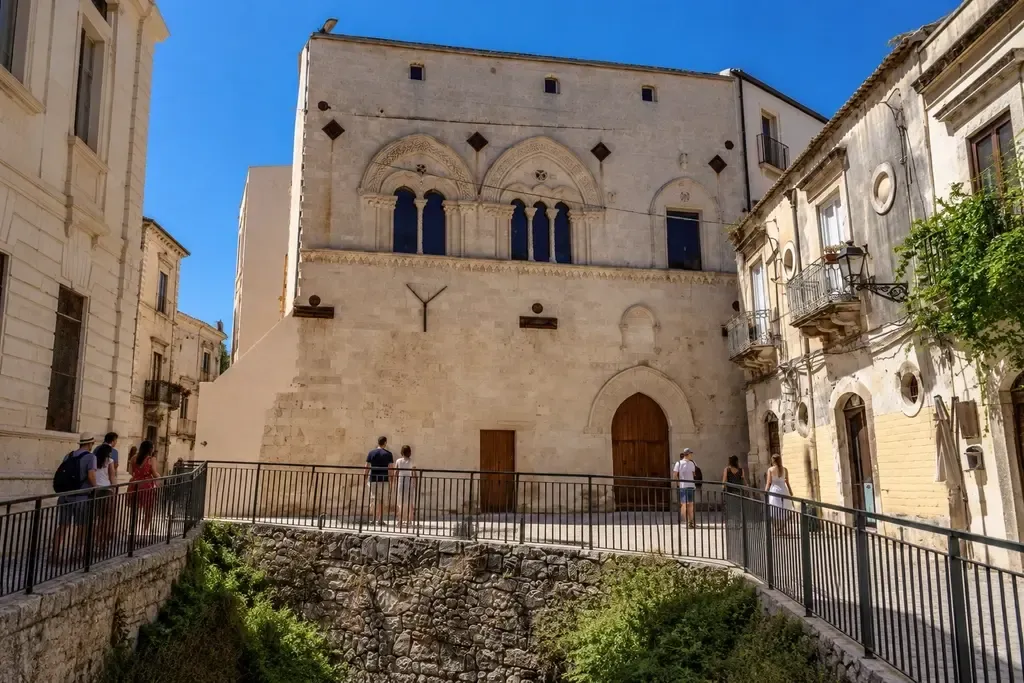
Palazzo Montalto
One of the oldest palaces in Siracusa. The inscription on the portal, in Latin, carries the date: 1397. It was built by Macciotta Mergulense, a member of the Aragonese nobility, in the Chiaramontano Gothic style that from the 14th to the 15th century left its mark from Palermo to Agrigento.
Today it is called Mergulense-Montalto because in 1365 Queen Constance of Aragon granted the area to Filippo Montalto, Baron of Prato. The facade retains a bifora and a trifora with geometric, floral and zigzag motifs — a rare medieval testament in a city dominated by post-earthquake baroque. It stands in the Spirduta quarter.
The Jewish Quarter
of la Giudecca
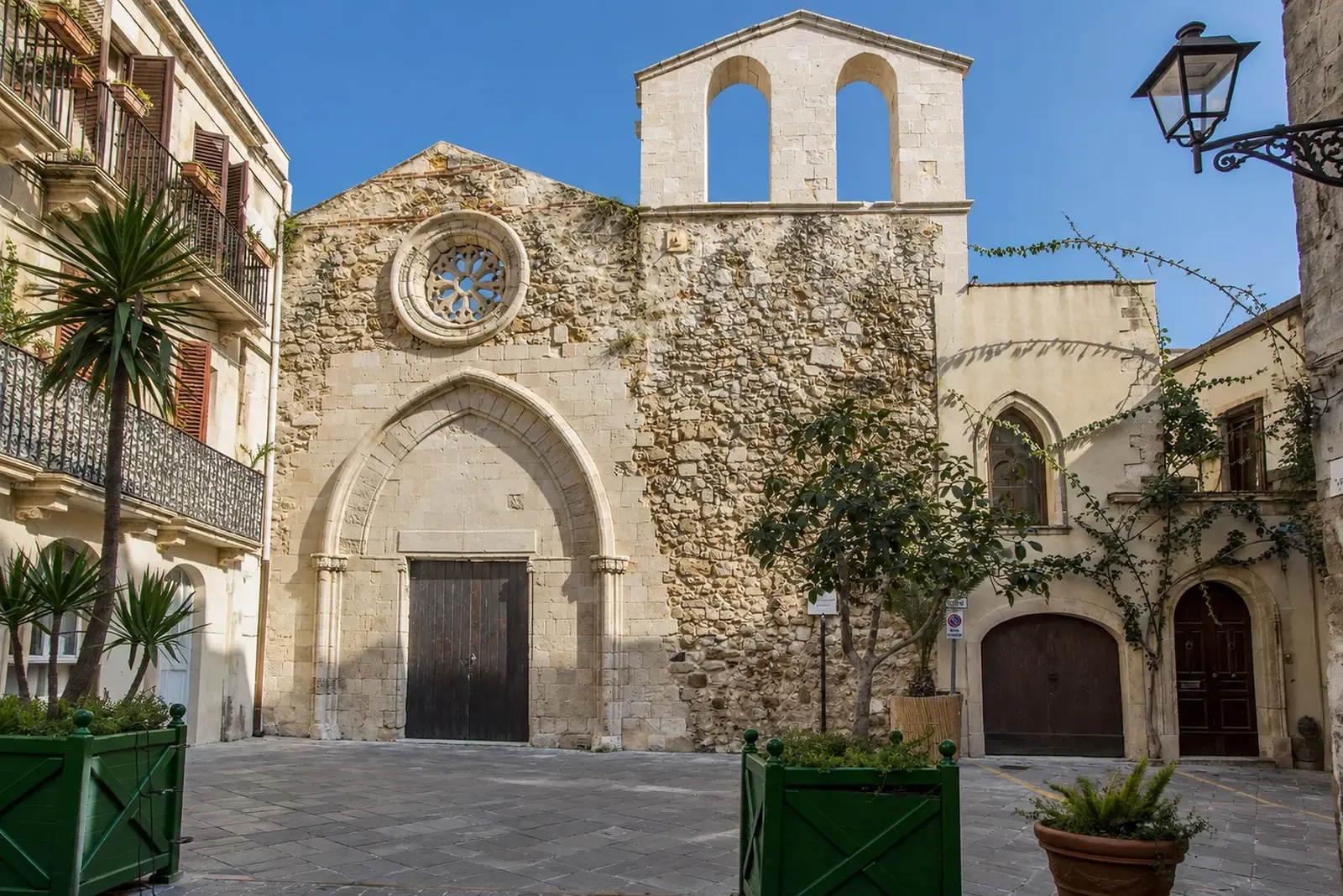
Between Via della Giudecca, Via Alagona and Via dell'Ermenegilda lies one of the most important Jewish quarters of medieval Sicily. The Jewish community of Siracusa settled here at the end of the 7th century AD; it was expelled in 1492 under the Alhambra Decree of the Catholic Monarchs. Walking today through the narrow alleys, among low houses and hidden courtyards, is to follow the traces of that history.
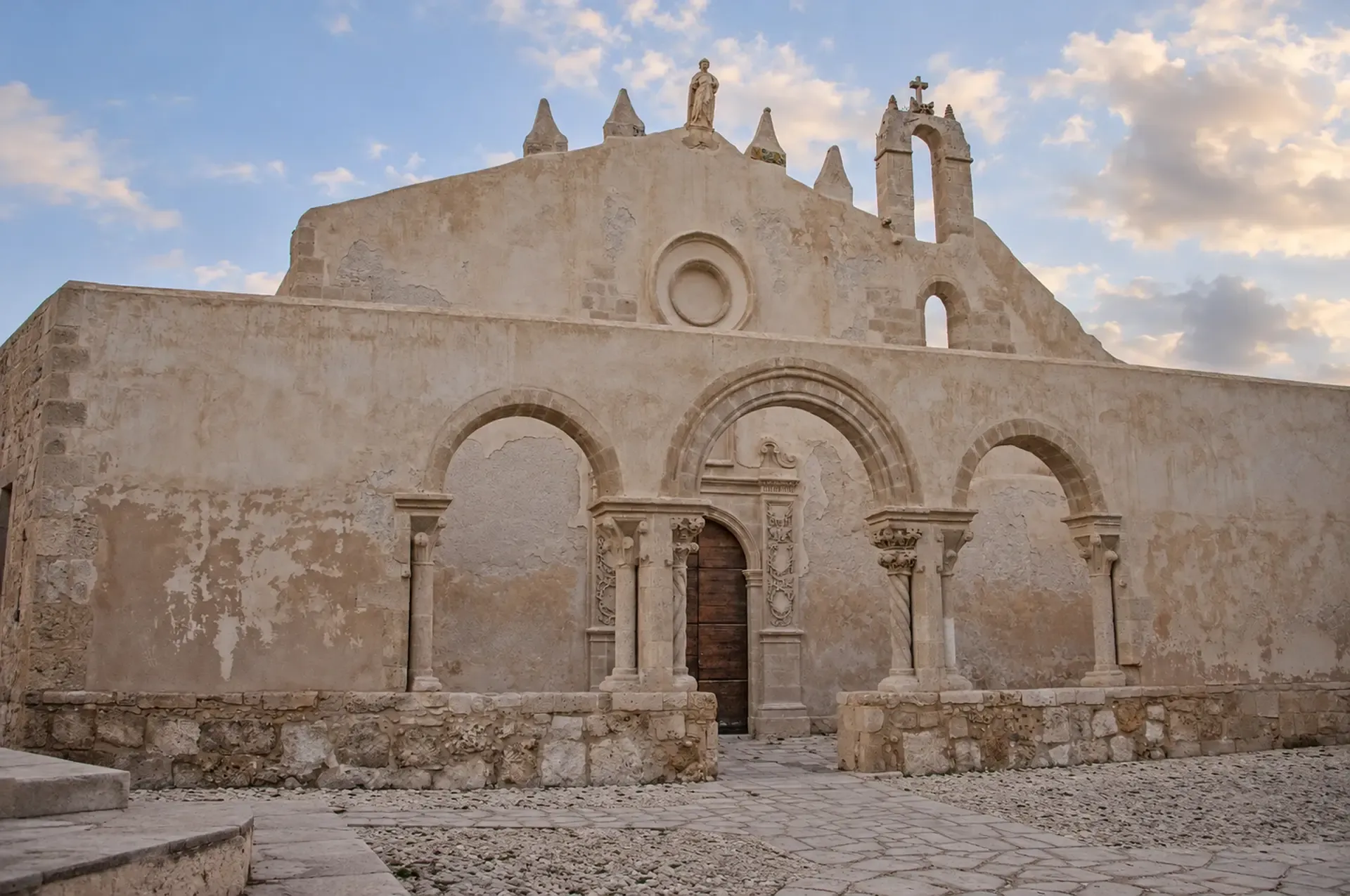
In the quarter you will also find the Chiesa di San Giovannello (14th century), a small Gothic church with an ogival portal and a plain interior, on Via della Giudecca. It is the ancient synagogue, converted into a church after 1492.
Archaeological Park
of Neapolis
Where theater began.
In the 5th century BC Siracusa was the second largest Greek city in the Mediterranean after Athens. Aeschylus himself staged The Persians here. The Neapolis, «new city» in Greek, was the sacred and entertainment district: theaters, gigantic altars, stone quarries. All concentrated in a small area, covered by a single ticket.
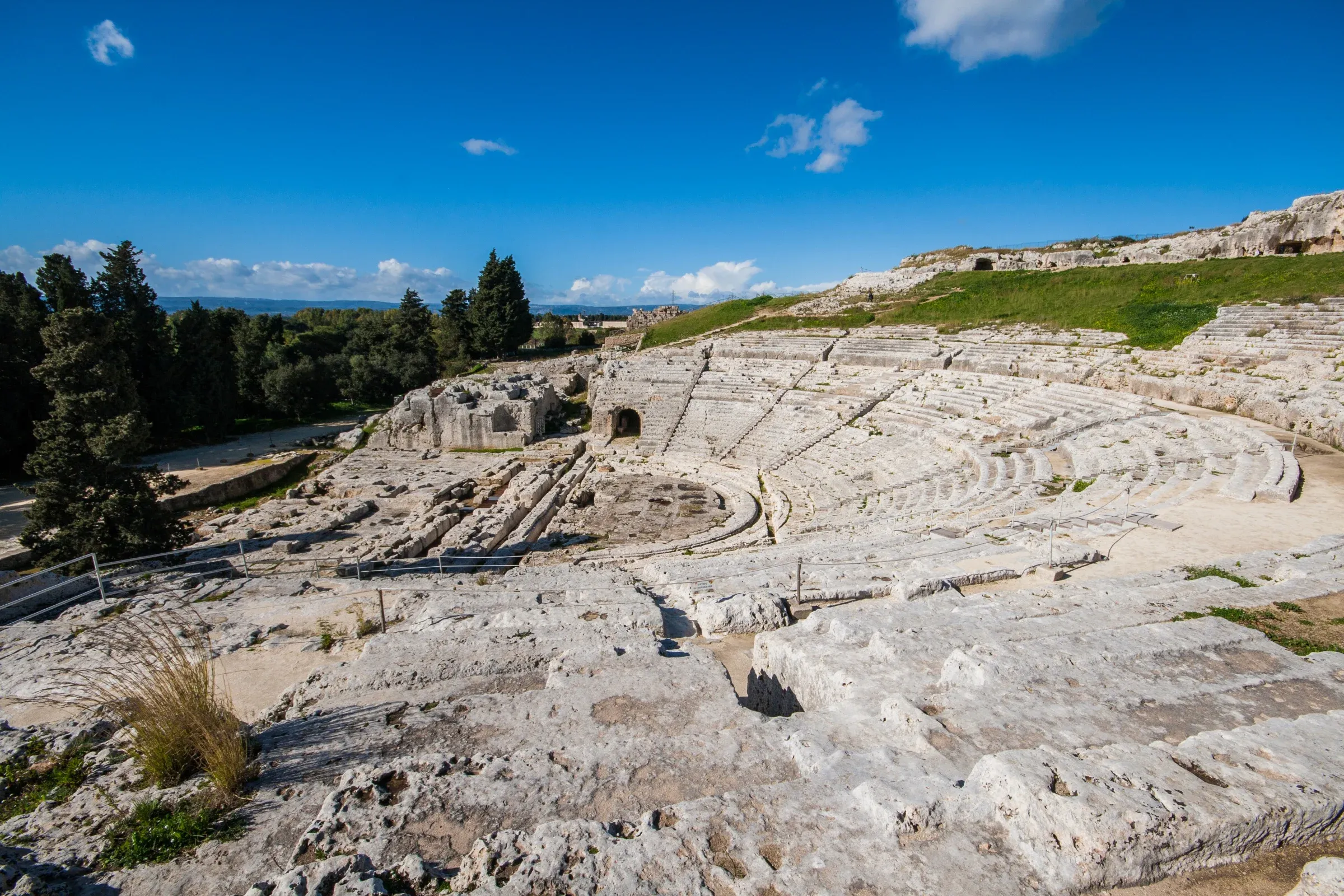
Greek Theater
5th century BC, built on the slope of the Temenite hill. Diameter of 138.6 meters, a cavea for fifteen thousand spectators: among the largest theaters of the ancient world. Here Aeschylus restaged The Persians — the tragedy that had premiered in Athens in 472 BC — and staged The Women of Etna, which he wrote for this very theater. Restructured by Hiero II in the 3rd century BC and still in use.
In the 16th century the Spanish dismantled part of the steps to build the walls of Ortigia. Since 1914 the INDA has staged classical tragedies here every summer: May–July, a not-to-be-missed event.
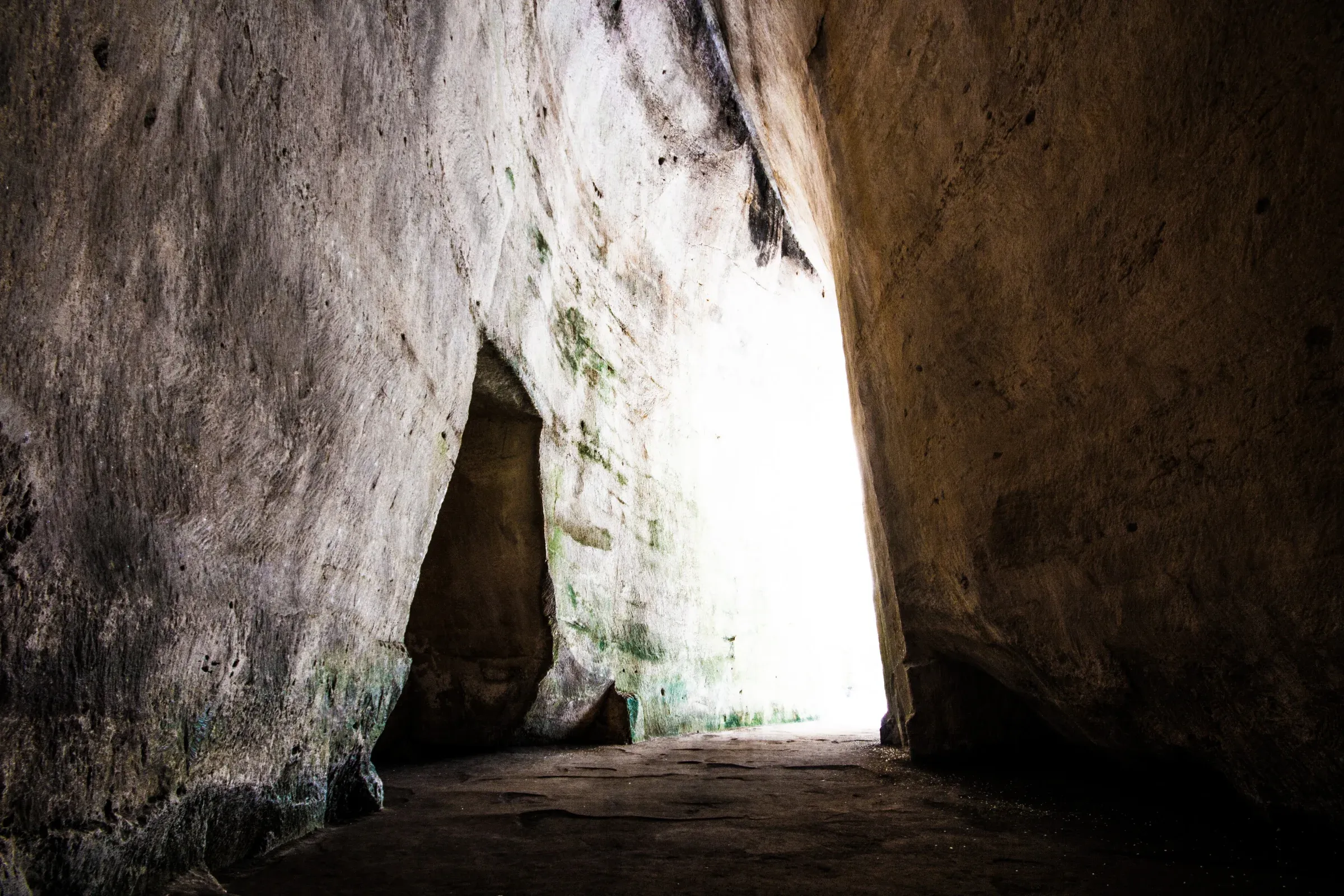
Ear of Dionysius and the Latomie
An artificial cave 23 meters high and 65 meters deep, carved into the limestone to extract the blocks from which Siracusa was built. Its ear-shaped form amplifies the echo up to sixteen times. It was Caravaggio, visiting in 1608, who gave it its current name, «the Ear of Dionysius»: legend has it that the tyrant Dionysius exploited the exceptional acoustics to eavesdrop on the prisoners held in the quarries.
The Latomie, the stone quarries, also served as open-air prisons. Today they are a garden of lemon trees, magnolias and papyrus: one of the coolest spots in the city in the height of summer.
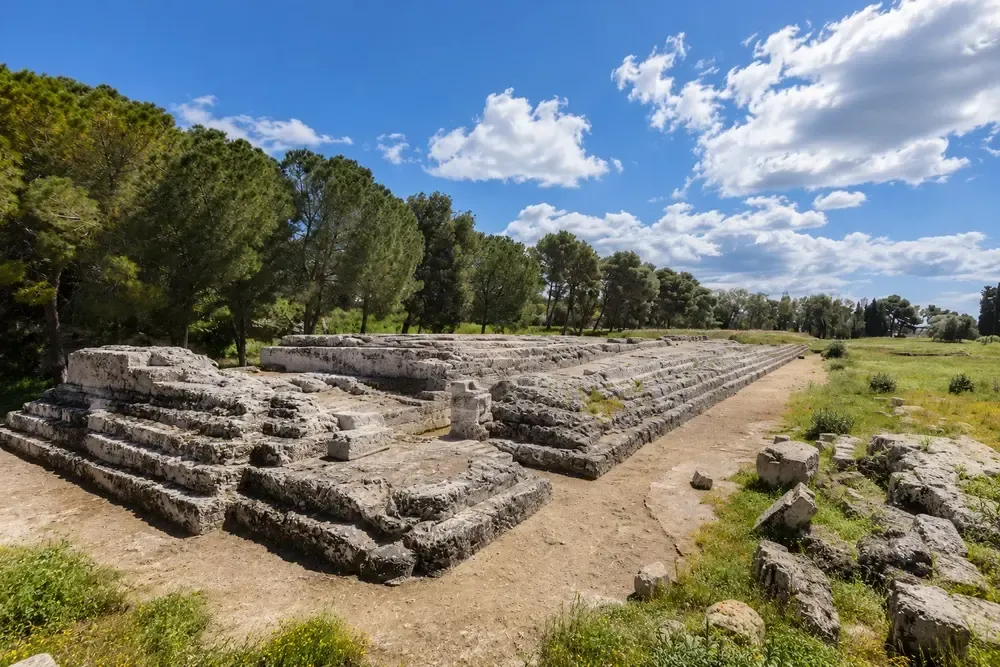
Altar of Hiero II
The largest altar in antiquity: 198 meters long and 23 meters wide, commissioned by Hiero II in the 3rd century BC. During the Eleutheria, the festival in honor of Zeus the Liberator, four hundred and fifty bulls were sacrificed simultaneously.
Today only the foundation carved into the rock remains. But the scale says everything: walking around it gives you a sense of the Siracusa of Hiero.
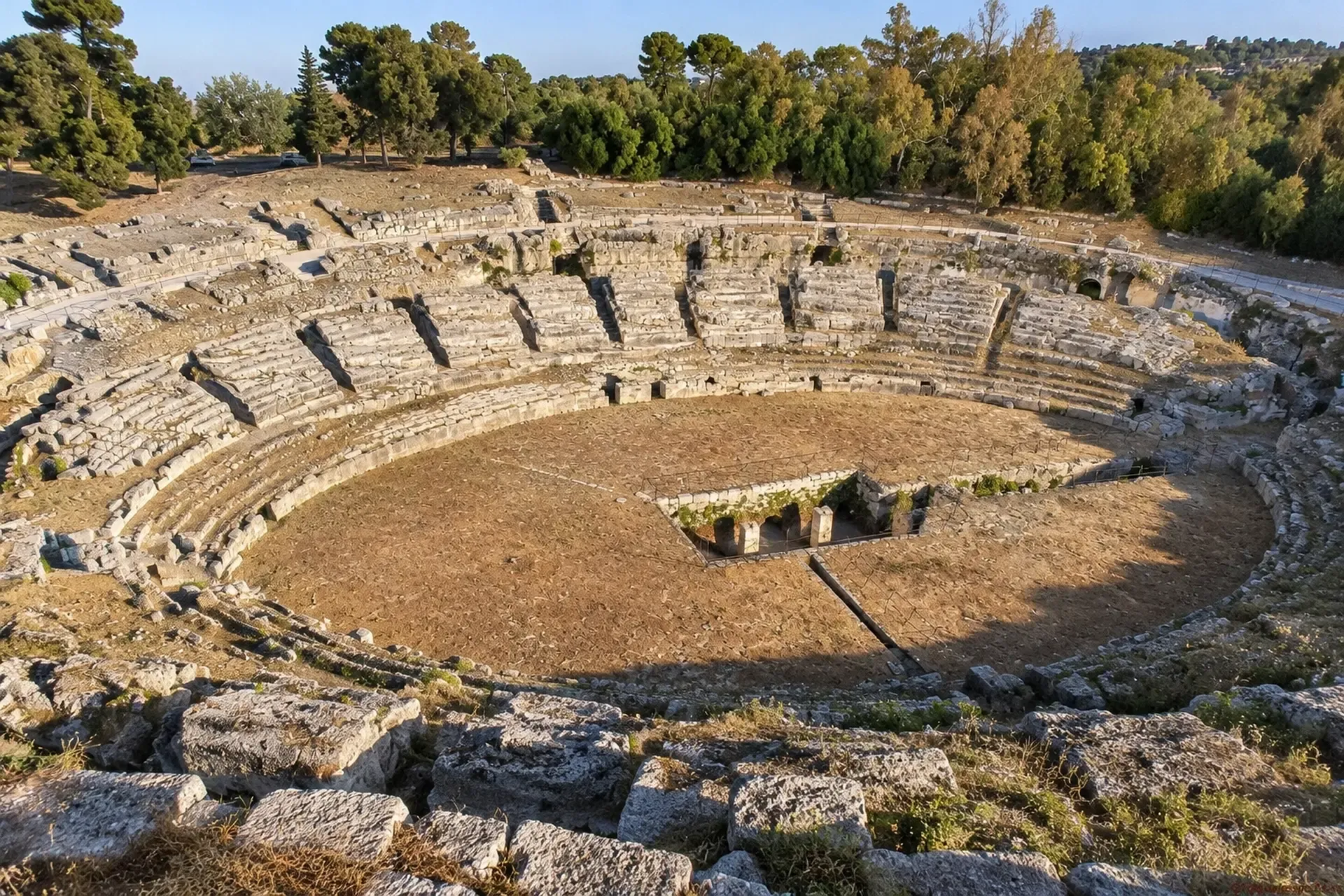
Roman Amphitheater
Late 1st century BC, 140 by 119 meters, elliptical, largely carved into the rock. Designed for munera (gladiatorial combat) and venationes (ritual hunts). Still visible are the underground passages, the corridors for wild animals, and the trapdoor access points.
Less visited than the Greek Theater. Worth twenty minutes: the transition from theater to arena tells the story of the passage from Greek Siracusa to Roman Siracusa.
Museum & Catacombs
Just beyond the park.
The Museum and Catacombs are not inside the archaeological park, but a short distance to the north, within the grounds of Villa Landolina. They can be visited on the same day as the Park — though preferably separately, as they require concentration. Separate tickets.
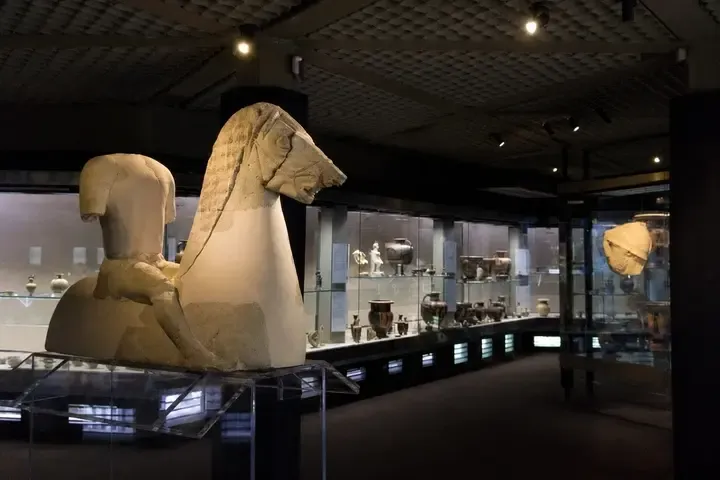
Paolo Orsi Archaeological Museum
One of the most important archaeological museums in Europe, named after the Trentino archaeologist who first systematically excavated Sicily. It holds 18,000 artifacts from the Neolithic to the Byzantine period: Proto-Corinthian vases, Greek coins, the Venus Anadyomene, the sarcophagus of Adelphia.
The current building (1988) is a hexagonal structure within the grounds of Villa Landolina. A clear chronological itinerary with well-curated captions also in English.
Catacombs of San Giovanni
The second largest Early Christian complex in Italy after Rome. Galleries carved between the 4th and 5th centuries AD into the limestone, with niche tombs, arcosolium burials and family cubicles. Buried here is Marcian, the first bishop of Siracusa.
Above, the Norman church; below, the crypt of San Marziano with Byzantine frescoes. Guided visit included, forty-five minutes: the acoustics and the silence make the moment sacred.
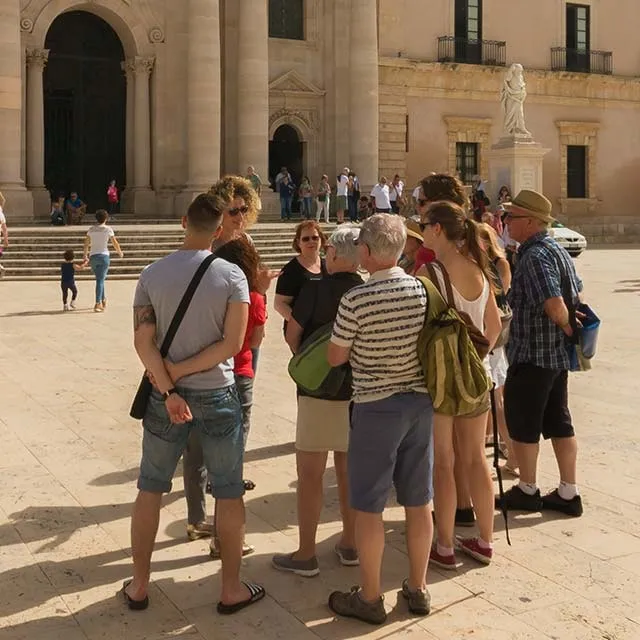
What if someone could tell you all about them?
The same places you've just read about — Ortigia and the Neapolis Archaeological Park — explored with an authorized tour guide, in Italian or English, who reveals their stories and hidden details.
See the guided toursNot sure
where to start?
Eleonora is a tour guide. At check-in she'll recommend the right itinerary for your days, your pace and your curiosity.
Book your stay →